The rest of the day
What to see in Kutná Hora besides the bone church
St Barbara's Church, the Italian Court, the Plague Column and the silver museums: the other stops that fill a day in the town.
Book the day trip ↗Quick answer
Kutná Hora is worth more than the ossuary. St Barbara's Church is among the main examples of European Gothic architecture, the Italian Court housed the royal mint, the Plague Column dates from 1714 to 1715 and two buildings, Hrádek and the Stone House, hold the Museum of Silver. All of it belongs to the silver town that UNESCO listed in 1995.
St Barbara's Church
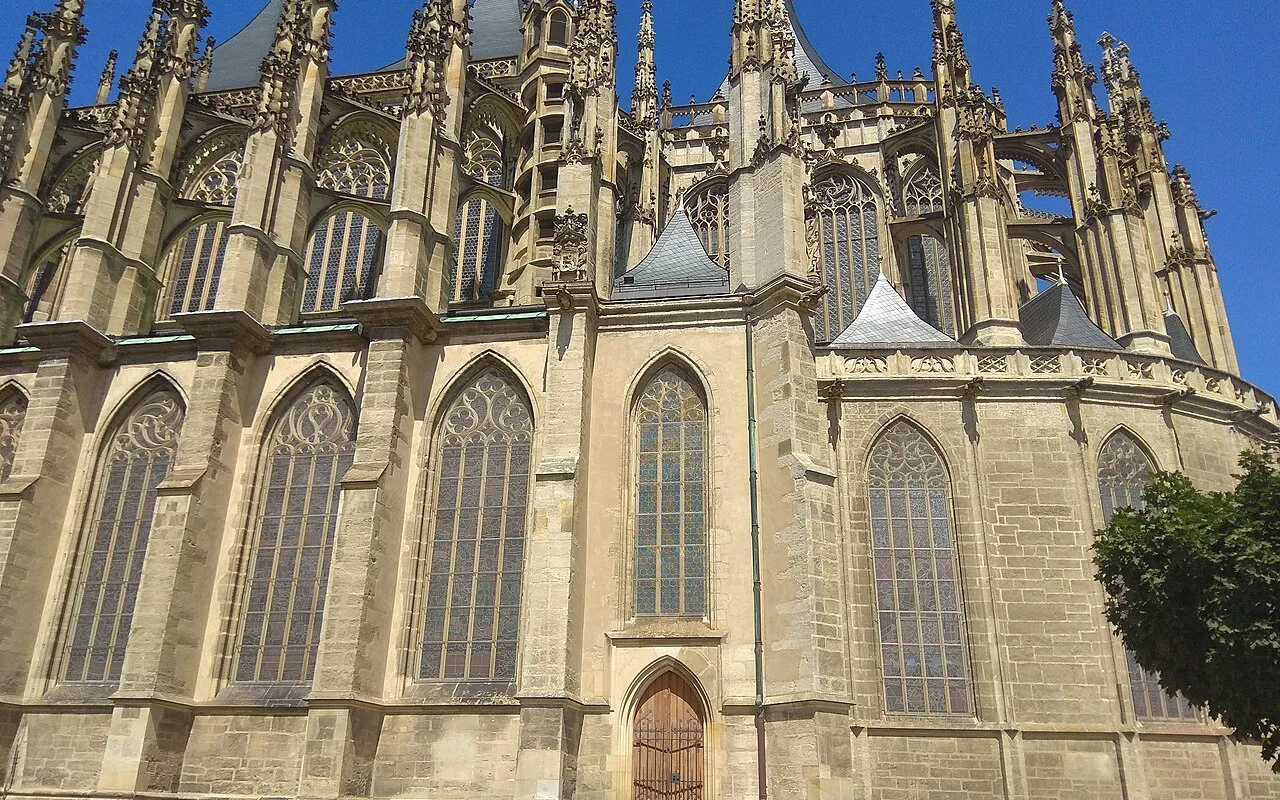
Construction began in 1388 and did not finish until 1905. Work stopped for more than 60 years during the Hussite Wars, and resumed in 1481. St Barbara is the patron saint of miners, which fits a town built on silver. Medieval frescoes showing mining-town life have been partly preserved inside.
The Italian Court
The Italian Court is a Gothic building described as the oldest monument in Kutná Hora. It housed the royal mint. It is where the Prague groschen, once hard currency in central Europe, were struck. The coach tour includes entrance to the Italian Court.
The silver museums
Hrádek began as a wooden fortress in 1312 and was later rebuilt as a palace. It has housed the Museum of Silver since 1947. The Stone House, a late Gothic burgher house of the 1480s, has housed part of the Museum of Silver since 1902. Both are worth a look if you have extra time.
The Plague Column
The Plague Column was made in 1714 and 1715 by František Baugut as a pietà for the victims of the plague epidemic of 1713. It is an easy detour on a day in the old town.
The cathedral at Sedlec
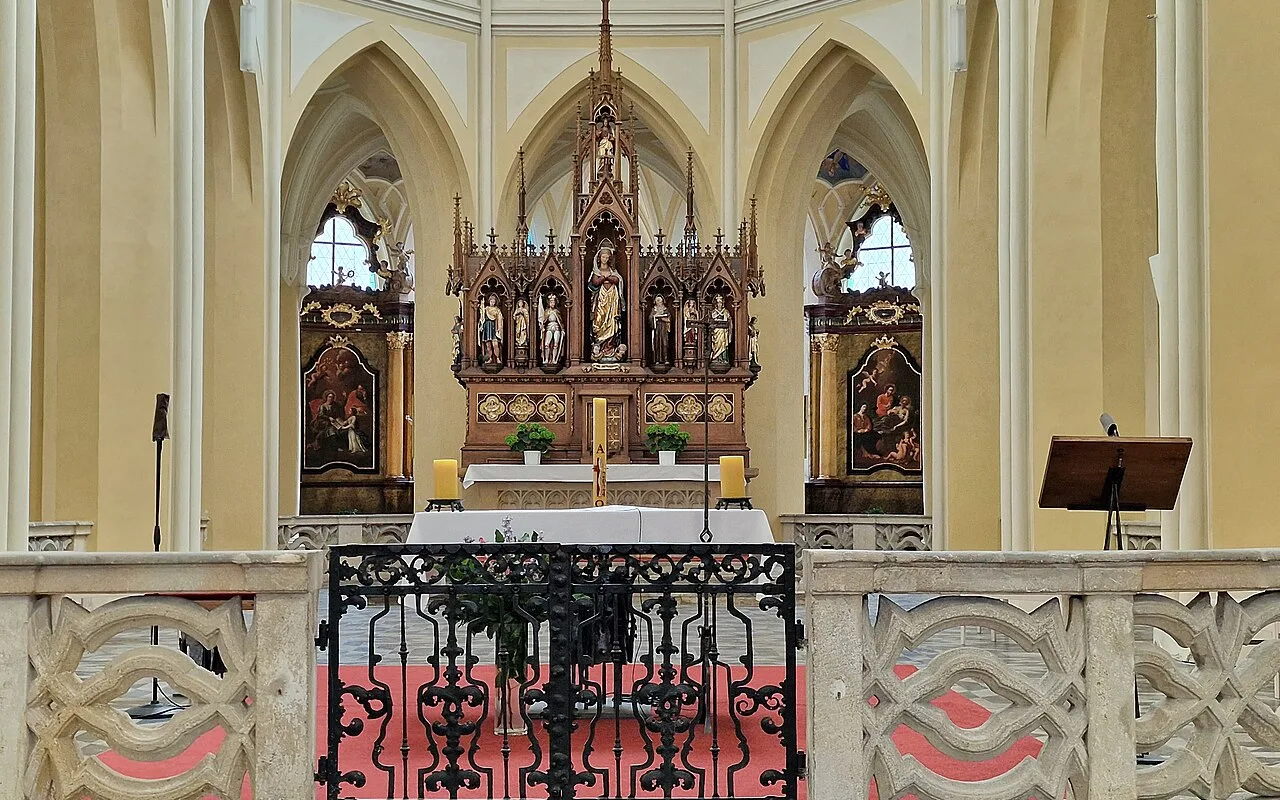
The former Sedlec abbey church, dedicated to the Assumption of Mary and Saint John the Baptist, was rebuilt from 1699 to 1707 to designs by Paul Ignaz Bayer and Jan Santini Aichel. It stands near the ossuary and shares the UNESCO listing of 1995.
The mint and the groschen
Shortly after 1300 Kutná Hora became the seat of the central mint of the Czech lands, where Prague groschen were minted. Mining in the town began in 1260. That silver is why the town could build a Gothic church of St Barbara's ambition, and why a day among its stones is a day among the proceeds of a medieval mining boom.
Fitting it into a day
The tours spend about 30 minutes at the ossuary and about 30 minutes at St Barbara's, with a walk through the old town between and after. The train tour adds an optional lunch at your own cost, and the coach tour adds free time. If you go alone, add the museums and give each stop longer.
The Hussite Wars and the town
In 1420 Sigismund used Kutná Hora as his base for an unsuccessful attack on the Taborites, which led to the Battle of Kutná Hora. In 1421 the Hussites burned Sedlec Abbey and captured the town. The pause in work on St Barbara's during those years is part of the same story.
Getting between the stops
The ossuary stands in Sedlec and the other sights in the old town, so a day in Kutná Hora has two halves. The tour itineraries join them with a local bus of about 15 minutes. Inside the old town the stops are close enough to walk, on uneven, cobbled and sloped ground, so comfortable shoes matter more than a map.
Frequently asked questions
Is St Barbara's worth seeing?
Yes. It is described as among the main examples of European Gothic architecture and is part of the UNESCO listing.
What is the Italian Court?
A Gothic building that housed the royal mint.
Can I see everything in one day?
You can see the main sights in about six hours, but the museums need extra time.
Sources